The 6040 transforms biomass into a durable and valuable carbon-based product called biochar through the processes of controlled pyrolysis, volatile burnout, and carbon stabilization. Feedstock volume is reduced by 90%, while the end product retains 25–30% of the total carbon in the feedstock. The carbon is effectively sequestered for centuries and the product is stable and suited to many soil and environmental applications.
Overview
The 6040 transforms biomass into a durable and valuable carbon-based product called biochar through the processes of controlled pyrolysis, volatile burnout, and carbon stabilization. Feedstock volume is reduced by 90%, while the end product retains 25–30% of the total carbon in the feedstock. The carbon is effectively sequestered for centuries and the product is stable and suited to many soil and environmental applications.
Key Benefits
High throughput, minimal to no feedstock preprocessing requiredExcellent mobility for off road worksitesHigh temperature, low oxygen, fast conversionProduces a high quality organic carbon product, sequestering up to 30% of the available carbonHigh throughput, minimal to no feedstock preprocessing requiredHigh temperature, low oxygen, fast conversionExcellent mobility for off road worksitesProduces a high quality organic carbon product, sequestering up to 30% of the available carbon
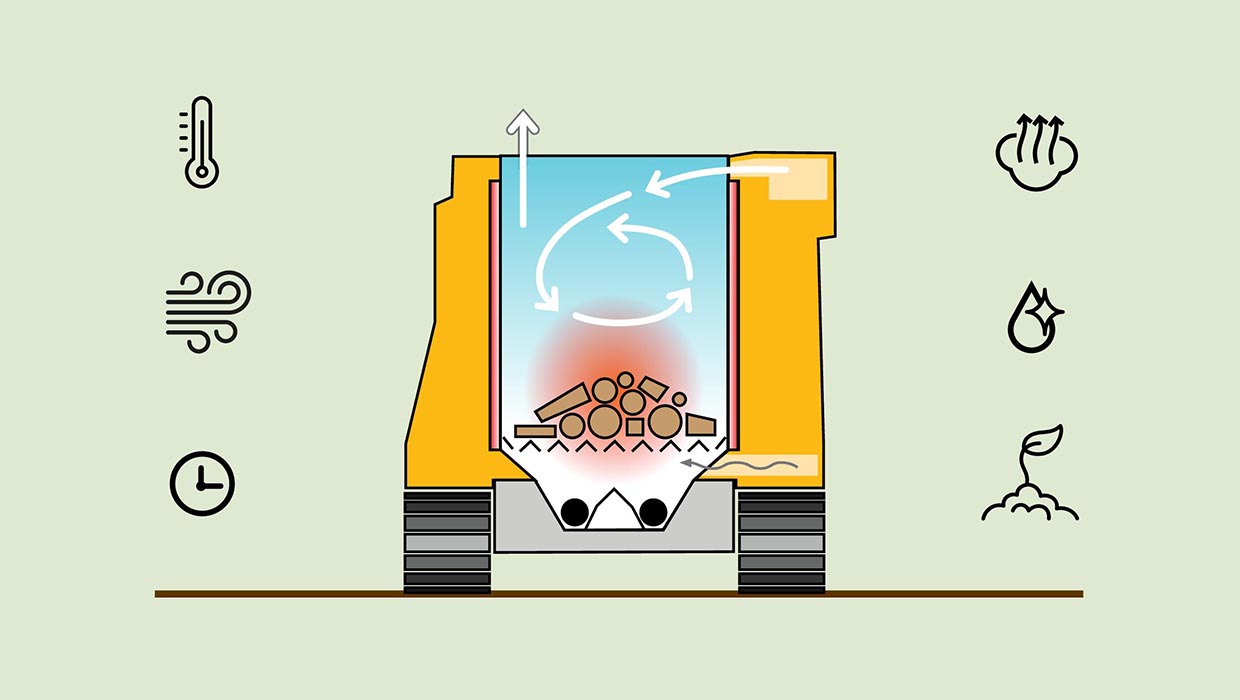
TEMPERATURE
Thermal ceramic sidewalls maintain consistent high chamber temperatures (1095˚C/2000˚F).
TURBULENCE
Dual airflow system's trajectory, volume and velocity create a vortex zone to combust released gases. Velocity and trajectory are determined by the air supply.
TIME
Gasses trapped in secondary combustion area (vortex) for 3-4 seconds for full combustion.
RESULTS
- Reduced particulate emissions (PM2.5-PM10)
- No contamination
- High quality organic carbon
3 T's of Combustion
1. Load feedstock (no preprocessing required)
2. Primary combustion
3. Under-air supply provides upward pressure
4. Over-air supply creates vortex
5. Secondary combustion (1095˚C/2000˚F)
6. Organic carbon falls through grates
7. Organic carbon is quenched in waterbath
8. Organic carbon is conveyed away
9. Fresh oxygen mixes to cool exhaust
Load area has a lower temperature, exhaust area has a higher temperature.
Process Overview
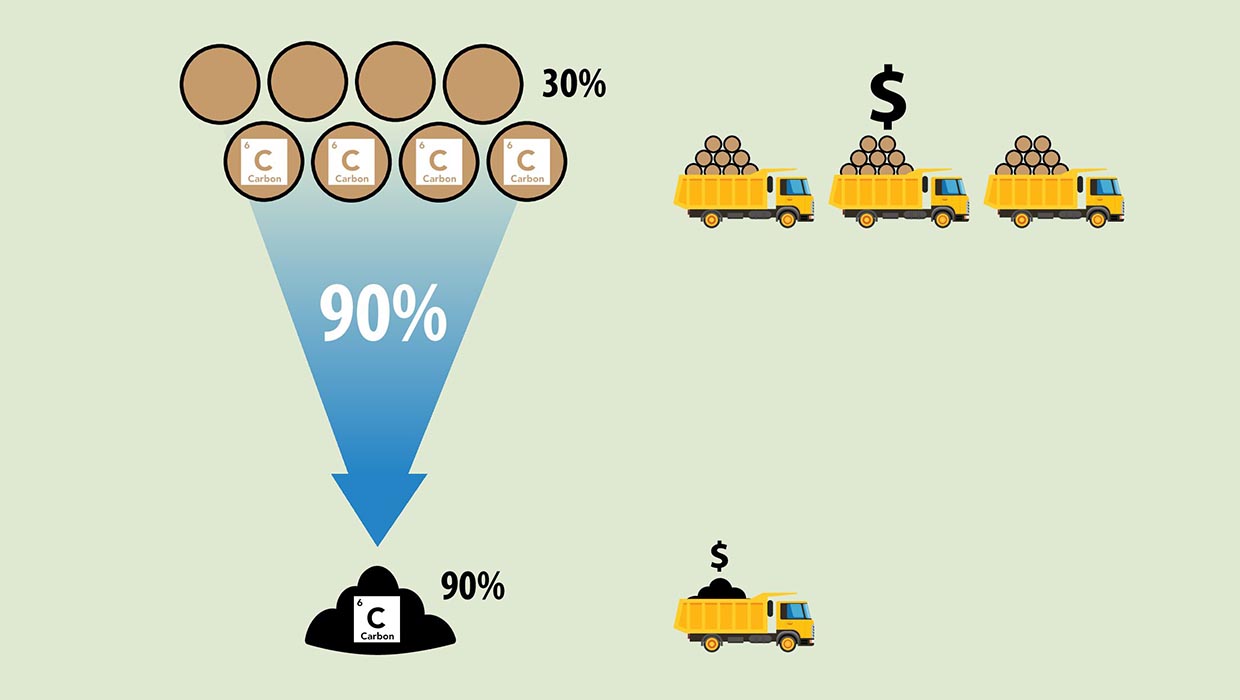
The carbonizing process sequesters up to 30% of the available carbon, resulting in a high quality product that is 90% carbon*.
The feedstock volume is also reduced by 90%.
- No transportation cost if spreading on site
- Low transportation cost if moving the product elsewhere
*Assuming feedstock of dry wood contains 50% carbon
Two innovators in North Carolina share perspectives on the great potential of the circular biochar economy, and how the mobile, high throughput 6040 carbonizer fits in.
An innovative California-based rancher and forestry professional employs Tigercat’s mobile carbonization technology to improve forest and soil health, mitigate wildfire risk and sequester carbon.
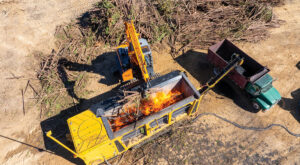
Watch the 6040 Carbonizer processing wood debris to produce consistent and high-grade organic carbon. The conversion process reduces the volume of infeed material by 90% and sequesters 25-30% of the total available carbon. It replaces open burning or other carbon intensive conversion processes, while creating a useful product.